Now a 10% performance gap is a fairly common gap for high-end NVIDIA cards. The price gap on the other hand is clearly wider than normal. For example, in the last generation the GTX 680 and GTX 670 were separated by roughly the same performance gap, but the GTX 670 came in at 80% the price of the GTX 680, not 65%. Ultimately NVIDIA’s “prosumer” positioning made Titan a very expensive card for gaming, with the end result being that the more strictly gaming focused GTX 780 could deliver very similar performance at a much lower price tag.
Showing posts with label Graphics Cards. Show all posts
Tuesday, September 24, 2013
Capsule Review: EVGA GeForce GTX 780 Superclocked ACX
Now a 10% performance gap is a fairly common gap for high-end NVIDIA cards. The price gap on the other hand is clearly wider than normal. For example, in the last generation the GTX 680 and GTX 670 were separated by roughly the same performance gap, but the GTX 670 came in at 80% the price of the GTX 680, not 65%. Ultimately NVIDIA’s “prosumer” positioning made Titan a very expensive card for gaming, with the end result being that the more strictly gaming focused GTX 780 could deliver very similar performance at a much lower price tag.
Thursday, August 15, 2013
AMD details Never Settle Forever Bundle
Tuesday, July 9, 2013
NVIDIA GeForce GTX 760 Review: The New Enthusiast Kepler
Launching today, that part will be GeForce GTX 760, the direct successor to the GTX 660 Ti. Whereas the GTX 770 fully supplanted the GTX 680 and put the GTX 670 in a tough spot, GTX 760 will be doing the same thing from the other direction, replacing GTX 660 Ti while also assuming the rest of the market segment formerly inhabited by the GTX 670. As a result NVIDIA is gunning for performance between a GTX 660 Ti and GTX 670, while bringing the price down to $249, nearly $50 below GTX 660 Ti. Consequently this is a lot like the GTX 770 launch – a GK104 refresh that will see NVIDIA delivering more for less.
| GTX 770 | GTX 760 | GTX 660 Ti | GTX 560 Ti | |
| Stream Processors | 1536 | 1152 | 1344 | 384 |
| Texture Units | 128 | 96 | 112 | 64 |
| ROPs | 32 | 32 | 24 | 32 |
| Core Clock | 1046MHz | 980MHz | 915MHz | 822MHz |
| Shader Clock | N/A | N/A | N/A | 1644MHz |
| Boost Clock | 1085MHz | 1033MHz | 980MHz | N/A |
| Memory Clock | 7GHz GDDR5 | 6GHz GDDR5 | 6GHz GDDR5 | 4GHz GDDR5 |
| Memory Bus Width | 256-bit | 256-bit | 192-bit | 256-bit |
| VRAM | 2GB | 2GB | 2GB | 1GB |
| FP64 | 1/24 FP32 | 1/24 FP32 | 1/24 FP32 | 1/12 FP32 |
| TDP | 230W | 170W | 150W | 170W |
| Transistor Count | 3.5B | 3.5B | 3.5B | 1.95B |
| Manufacturing Process | TSMC 28nm | TSMC 28nm | TSMC 28nm | TSMC 40nm |
| Launch Price | $399 | $249 | $299 | $249 |
Note that this is also the only desktop GK104 part that potentially ships with 3 GPCs; with 2 SMXes disabled, a GPC goes with it if those SMXes are part of the same GPC. Though as with the other NVIDIA parts where there’s a variable number of GPCs, we haven’t seen a measurable impact on performance, so it’s more of a technicality than a meaningful difference.
Like the GTX 770, the GTX 760 is fairly highly clocked for a GK104 part. Its base clockspeed of 980MHz is 65MHz (7%) higher than both the GTX 670 and GTX 660 Ti, which helps to offset the lost SMX. At the same time this gives the GTX 760 more ROP throughput than even the GTX 670. The end result is a product whose performance bounces between the GTX 660 Ti and GTX 670 depending on the workload, and typically is biased towards the GTX 670. Altogether we’re looking at about 92% of the GTX 660 Ti’s shading/texturing performance and 43% more ROP throughput. Memory clocks on the other hand are unchanged at 6GHz, but thanks to its full 256-bit memory bus GTX 760 will have 33% more memory bandwidth than GTX 660 Ti.
On the performance front GTX 760’s other trick compared to the GTX 600 series parts it replaces is that like the GTX 770 it’s a GPU Boost 2.0 part, meaning its boost performance is further min-maxed than GPU Boost 1.0 parts. Thermals willing, our sample boosts to 1149MHz out of the box – the official boost clock is over 100MHz lower at 1033MHz – a bigger and more frequent boosting outcome than what we saw with the GTX 660 Ti. So even though GTX 760 still theoretically has lower shader performance than GTX 660 Ti, there’s only a single benchmark where the GTX 760 doesn’t beat its predecessor, and it’s a non-gaming benchmark at that.
Meanwhile GTX 760’s TDP will stand at 170W, the same TDP as the GTX 670. Accounting for throttling differences from GPU Boost 2.0 that will have GTX 760 reaching its TDP more often, GTX 760 will essentially draw as much or more power than GTX 670, never mind GTX 660 Ti. Like GTX 770 NVIDIA has little choice but to raise their TDP here at any given tier in order to unlock more performance. 170W in turn is a rather intentional number that will allow NVIDIA’s partners to recycle their GTX 670 designs since the maximum power draw (and maximum heat generation) remain unchanged. Idle power on the other hand is going to be marginally lower, as like the GTX 770 the GTX 760 implements a lower idle clock state that shaves off a couple of watts.
Moving on, with this launch we’ll see NVIDIA shrink their desktop product stack a bit. With GK110 based cards at the high-end of NVIDIA’s stack and price compression below $500 pushing prices down, the desktop GK104 product stack is being reduced from 3 cards – GTX 660 Ti, GTX 670, GTX 680 – to just two cards. NVIDIA’s configurations leave them an out should they ever need it, but as it stands these will be the only two GK104 cards in NVIDIA’s 700 series lineup, with GTX 770 and GTX 760 splitting up the old market segments.
With a launch price of $249, GTX 760 is another aggressive launch for NVIDIA compared to both their previous generation products and AMD’s current lineup, with NVIDIA now offering performance notably better than what have been more expensive products. Other than its lower 150W TDP, GTX 660 Ti is fully redundant at this point; GTX 760 is faster and cheaper. GTX 670 is still going to be a hair faster, but with GTX 670 prices still above $300 it’s not being placed at a value sweet-spot, and like the rest of the GK104 based 600 series lineup is slowly being phased out entirely.
The more dynamic matchup will be GTX 760 versus AMD’s product lineup. $249 cuts right down the middle of AMD’s current product lineup, putting GTX 760 between the Radeon HD 7870 and 7950. At the same time NVIDIA’s goal here is to beat the 7950 in performance – keep in mind the GTX 660 Ti tied the original (non-boost) 7950 – which is something the GTX 760 doesn’t have too much trouble with. AMD and their partners have already prepared for this somewhat, as after-rebate prices on 7950 cards have come down from about $300 to about $280 in the last month, but that means GTX 760 still carries a $30 lower price tag. Once more there are no bundles in play on the NVIDIA side, so the wildcard on the AMD side will once more be their 4 game Level Up with Never Settle Reloaded bundle.
Finally, this is another hard launch. GTX 760 cards will be available from the usual retailers and e-tailers. Meanwhile since GTX 760 is designed to be a drop in replacement for GTX 670 on board designs, NVIDIA’s partners will be launching with fully custom cards right away, most of them based on their previous customized GTX 670 designs. Reference style cards will likely be few in number, but unlike the GTX 770 launch (with its relatively expensive Titan cooler) the GTX 670/760 reference cooler does not price itself out of the market.
| June 2013 GPU Pricing Comparison | |||||
| AMD | Price | NVIDIA | |||
| $400 | GeForce GTX 770 | ||||
| Radeon HD 7970 | $360 | ||||
| $350 | GeForce GTX 670 | ||||
| Radeon HD 7950 | $280 | GeForce GTX 660 Ti | |||
| $250 | GeForce GTX 760 | ||||
| Radeon HD 7870 | $200 | GeForce GTX 660 | |||
Monday, June 24, 2013
AMD Radeon HD 7990 Review: 7990 Gets Official
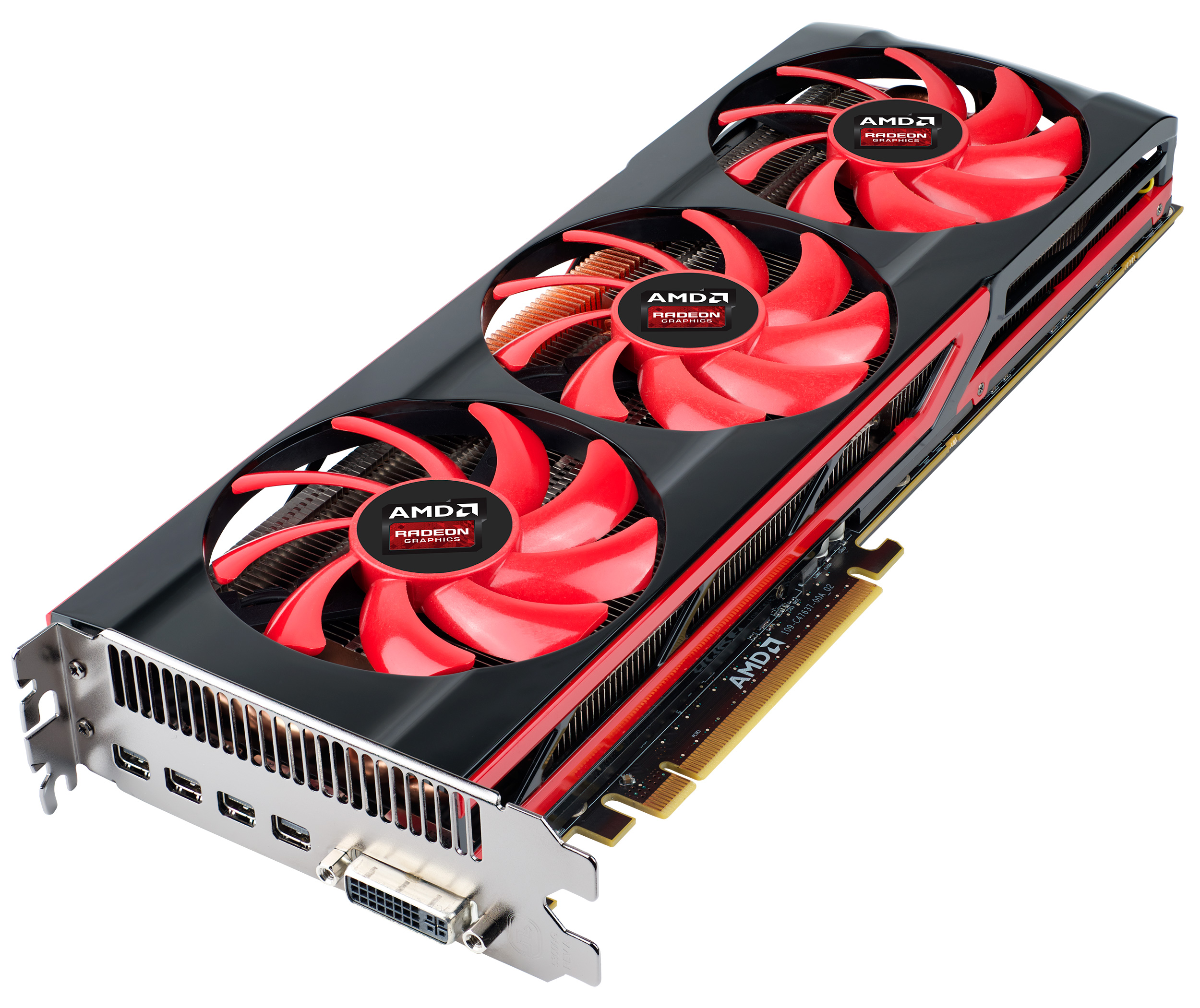
Of course with that said, like so many other facets of the 7000 series, the dual-GPU situation has played out rather unusually in the past year. In a typical year we would see AMD release a standard design, and then later on partners like Asus and PowerColor would release their own custom designs in the name of product differentiation and squeezing out just a bit more performance. Instead the 7000 series has played out in reverse: Asus and PowerColor released their designs first. Consequently, up until this point the 7990 has been “officially unofficial”, reflecting the fact that the first 7990s were AMD sanctioned products, but not based on AMD designs.
But at long last the 7990 is becoming fully official. AMD is getting into the game with their own 7990 design, and perhaps more importantly they’re doing so while coming to bear with the kind of engineering resources that only a GPU manufacturer can provide. This isn’t going to be the first 7990 – that honor belongs to PowerColor’s 7990 – but this is unquestionably the most important 7990. For AMD and their partners going official doesn’t just mean the AMD is taking a greater role in matters, but as we’ll see it means changing the rules of the game entirely.
| AMD GPU Specification Comparison | ||||||
| AMD Radeon HD 7990 | AMD Radeon HD 7970 GHz Edition | AMD Radeon HD 7970 | AMD Radeon HD 6990 | |||
| Stream Processors | 2 x 2048 | 2048 | 2048 | 2 x 1536 | ||
| Texture Units | 2 x 128 | 128 | 128 | 2 x 96 | ||
| ROPs | 2 x 32 | 32 | 32 | 2 x 32 | ||
| Core Clock | 950MHz | 1000MHz | 925MHz | 830MHz | ||
| Boost Clock | 1000MHz | 1050MHz | N/A | N/A | ||
| Memory Clock | 6GHz GDDR5 | 6GHz GDDR5 | 5.5GHz GDDR5 | 5GHz GDDR5 | ||
| Memory Bus Width | 2 x 384-bit | 384-bit | 384-bit | 2 x 256-bit | ||
| VRAM | 2 x 3GB | 3GB | 3GB | 2 x 2GB | ||
| FP64 | 1/4 | 1/4 | 1/4 | 1/4 | ||
| Transistor Count | 2 x 4.31B | 4.31B | 4.31B | 2 x 2.64B | ||
| PowerTune Limit/TDP | 375W | 250W+ | 250W | 375W | ||
| Manufacturing Process | TSMC 28nm | TSMC 28nm | TSMC 28nm | TSMC 40nm | ||
| Architecture | GCN | GCN | GCN | VLIW4 | ||
| Launch Date | 04/23/2013 | 06/22/2012 | 01/09/2012 | 03/11/2011 | ||
| Launch Price | $999 | $499 | $549 | $699 | ||
The big question with any dual-GPU card of course is what kinds of clockspeeds it can run at, and as a turns out the 7990 can clock rather high. The 7990 is a PowerTune Boost part like the 7970GE it’s based on, giving the card a base clockspeed of 950MHz, and a boost clock of 1000MHz. Meanwhile the memory is clocked at 6GHz, the same as the 7970GE. As a result the 7990 is surprisingly close to being a 7970GE Crossfire setup on a single card, clocked just 50MHz below AMD’s single-GPU flagship card. In fact this is better than some of the earlier 7990s such as PowerColor’s, which were clocked lower and simultaneously lacked PT Boost.
But perhaps the most defining aspect of AMD’s 7990, and the thing that sets it apart from unofficial 7990s that came before it is the TDP. AMD’s 7990 has an official TDP of just 375W, which although common for official dual-GPU cards, is quite a bit lower than the TDPs of the unofficial 7990s. As the GPU manufacturer AMD has the ability to do finely grained binning that their partners cannot, so while Asus and PowerColor have essentially been putting together cards that really are two 7970s on a single card – right down to the TDP – official 7990s get the advantage of AMD’s binning process, significantly reducing power consumption. The end result is that while an unofficial 7990 would be a 450W+ part, AMD can deliver the same or better performance while consuming much less power, putting the 7990 within the all-important 375W envelope that OEMs and boutique builders look for.
While we’re on the subject of power, this is the first official AMD dual-GPU part to include AMD’s ZeroCore power technology, which was introduced with the GCN family. ZeroCore as you might recall allows AMD to almost completely shut off slave GPUs when they’re not in use, which in turn allows AMD to further reduce their idle power consumption. The biggest benefits are found in multi-card setups since this allows the fans on those slave cards to be shut down, but even on the 7990 it still provides a benefit by allowing AMD to curtail their idle power consumption. Consequently this pushes the idle TDP of the 7990 down to around 20W, which is greater than a single card, but a clear improvement over 6990 and earlier AMD dual-GPU cards.
Moving on to product stacks and competition, it comes as no great surprise that AMD is placing their newest flagship part directly opposite NVIDIA’s flagship cards. AMD doesn’t produce a GPU equivalent to GTX Titan’s massive GK110 GPU, so the 7990 is AMD’s official answer to both Titan and NVIDIA’s own dual-GPU card, the nearly year-old GTX 690. In the case of the GTX 690 it’s a rather straightforward matchup since both cards are based on the same principles, while against Titan AMD needs to make a case about raw performance versus the inherent simplicity of a single-GPU solution over a dual-GPU solution.
Along those lines, since AMD is placing the 7990 against NVIDIA’s flagships they will also be pricing it directly against NVIDIA’s flagships, setting the MSRP for the 7990 at $999. This steep price tag raised some ire with the GTX 690 and with GTX Titan, and it likely will here once more. But with single 7970GEs still regularly going for $400-$500 and the fact that AMD is throwing in their best Tahiti chips into 7990, there’s little incentive to charge less. A 7970GE CF setup will be both faster and cheaper, but as a pair of those cards take up 6 slots after accounting for cooling needs, AMD can bank on the fact that the 7990 is essentially the same size as a 7970GE, charging a premium for the size advantage.
Ultimately customers interested in the 7990 will have a bit of time to sit on the matter and decide if they want one. The 7990 is being launched ahead of its actual retail availability, with AMD telling us the cards will hit etailers within two weeks. Meanwhile all of AMD’s usual partners will be participating on this 7990, so expect to see 7990 cards from all of major AMD partners, and sold at all of the major etailers.
Finally, AMD has been having a blast with game bundles over the last few months, and they won’t be stopping with the 7990. In a game bundle that quite frankly I cannot recall being rivaled by anything else done in the last 20 years, AMD will be bundling the 7990 with 8 different games from the current and past Never Settle bundles. All of AMD’s current bundle titles are included: Crysis 3, Bioshock Infinite, Tomb Raider, and Far Cry 3: Blood Dragon. Along with that AMD is also packing in the best games out of their previous bundles: Far Cry 3, Hitman: Absolution, Sleeping Dogs, and Deus Ex: Human Revolution. Simply put, 7990 buyers will be well-stocked for games to play on their new video card.
Meanwhile on housekeeping note, AMD will be changing how vouchers are distributed for the 7990; rather than having etailers distribute the vouchers with qualifying purchases, AMD’s partners will be packing the vouchers into the product box. Though the etailers have been good about including vouchers, they do at times forget them. So for the 7990 AMD and their partners aren’t going to be taking any chances.
| April 2013 GPU Pricing Comparison | |||||
| AMD | Price | NVIDIA | |||
| AMD Radeon HD 7990 | $1000 | GeForce GTX Titan/GTX 690 | |||
| PowerColor Radeon HD 7990 | $900 | ||||
| Radeon HD 7970 GHz Edition | $450 | GeForce GTX 680 | |||
| Radeon HD 7970 | $390 | ||||
| $350 | GeForce GTX 670 | ||||
| Radeon HD 7950 | $300 | ||||
Tuesday, June 11, 2013
ASUS GeForce GTX 770 DirectCU II Unboxing!
As the new 28nm range from NVIDIA keeps adding to its numbers, so
does ASUS go on launching more options for PC gamers. This card is an
excellent performer, all ready for gaming in high settings beyond 1080p.
So you might want to consider a new appropriately-resolved monitor.
Much more power-efficient than the GTX 670, the GeForce GTX 770 DirectCU II has a modest TDP, with 1536 CUDA cores and a 1110MHz GPU in max boost mode. Its 2GB GDDR5 sits on a 256-bit interface, clocked at a nice 7010MHz.
As per DirectCU standards, you can expect on average 20% lower temps and up to three times quieter performance than with a reference GTX 770, meaning more stability, more overclocking, and less noise interference with your gaming. GPU Tweak makes it easy to change card settings and experiment with different profiles, plus Super Alloy Power components round off the package, using resilient materials that laugh in the face of heat and make sure this card can survive up to 2.5 times longer than stock, even if pushed to the limit.
Its SSU-shaped heatpipes (so called because they literally look like two S’s and one U put together) maximize heat transfer efficiency without requiring a bigger shroud. And then there’s NVIDIA GPU Boost 2.0 technology, a smarter version of their GPU Boost architecture that alters core clocks real-time while considering more than just 2D/3D mode or simple compute load calculations. This generation also takes into account live temp readings, leading to much more accurate and dependable speed adjustments with added stability to boost, I mean boot.
While this is an ASUS-branded card and it remains to be seen what ROG has in store for the GTX 700 series, you probably want to contemplate this card if it’s new build or upgrade time. It retails for around $400 in the US, but will be more than enough for any game in the next couple of years.
Let’s look at the unboxing pics!
Much more power-efficient than the GTX 670, the GeForce GTX 770 DirectCU II has a modest TDP, with 1536 CUDA cores and a 1110MHz GPU in max boost mode. Its 2GB GDDR5 sits on a 256-bit interface, clocked at a nice 7010MHz.
As per DirectCU standards, you can expect on average 20% lower temps and up to three times quieter performance than with a reference GTX 770, meaning more stability, more overclocking, and less noise interference with your gaming. GPU Tweak makes it easy to change card settings and experiment with different profiles, plus Super Alloy Power components round off the package, using resilient materials that laugh in the face of heat and make sure this card can survive up to 2.5 times longer than stock, even if pushed to the limit.
Its SSU-shaped heatpipes (so called because they literally look like two S’s and one U put together) maximize heat transfer efficiency without requiring a bigger shroud. And then there’s NVIDIA GPU Boost 2.0 technology, a smarter version of their GPU Boost architecture that alters core clocks real-time while considering more than just 2D/3D mode or simple compute load calculations. This generation also takes into account live temp readings, leading to much more accurate and dependable speed adjustments with added stability to boost, I mean boot.
While this is an ASUS-branded card and it remains to be seen what ROG has in store for the GTX 700 series, you probably want to contemplate this card if it’s new build or upgrade time. It retails for around $400 in the US, but will be more than enough for any game in the next couple of years.
Let’s look at the unboxing pics!
Highly informative packaging with distinct ASUS look that’s easy to spot on store shelves. Talk about stand out power.
Perhaps you can’t readily see the SSU shape of the heatpipes in these
pics, but for sure the DirectCU II cooler looks sweet as always, the
Super Alloy Power capacitors and other components are nice and beefy,
and the styling is very much eye-catching ASUS. You will need a 6-pin
and 8-pin to power this card, keep that in mind. This is to provide a
nice TDP ceiling, the card will not really need that much power even
under load.
It’s sure great to have connections: two DVI, HDMI, and DisplayPort. Remember this thing called VGA? I think it was blue!
Robust vented backplate is awesome. Keeps the card stronger and allows for underside air circulation.
So, are you already on the GTX 700 bandwagon? What are your impressions so far? Or are you still considering?
Subscribe to:
Posts (Atom)